

Let’s be honest. For the serious player, the casino isn’t a theme park. It’s a battlefield of probability, a place where every fraction of a percentage point matters. The goal isn’t just to win a hand or a spin—it’s to find the games where the odds are least hostile. That search leads, inevitably, to the world of low-house-edge table games.
But this landscape has evolved, you know? It’s not just about memorizing a basic strategy chart for blackjack anymore. The modern player needs to understand how these games became the sharpest tools in the shed and, more importantly, how to wield them effectively. Let’s dive in.
From Backrooms to Spotlight: A Brief History of Player-Friendly Odds
In the early days, casino games were often crude, with edges so large they’d make a modern advantage player shudder. The evolution towards lower house edges wasn’t born from generosity. It was competition. As gambling hubs like Las Vegas and later, Atlantic City, multiplied, casinos needed a draw.
Blackjack was the first real battleground. In the 1950s and 60s, the publication of basic strategy and later, card counting theory, turned the game on its head. Casinos panicked, changing rules to increase their edge. But players stayed away. The compromise? Offer games with inherently better odds, but manage risk through other means—like betting limits and detecting advantage play. This tension created the market for games that felt fair to skilled players.
The digital age accelerated this. Online casinos, with lower overhead, competed fiercely on game variety and player value. Software developers like Microgaming and Playtech started pumping out variants of baccarat, roulette, and blackjack with razor-thin edges to attract the savvy, high-volume crowd. The “low house edge” became a selling point, not a secret.
The Modern Arsenal: Top Low-Edge Games and Their Nuances
Okay, so which games are we talking about? Here’s the deal: the lowest house edge is meaningless if you don’t play the right version. A tiny rule change can swing the edge dramatically.
Blackjack: The Classic Workhorse
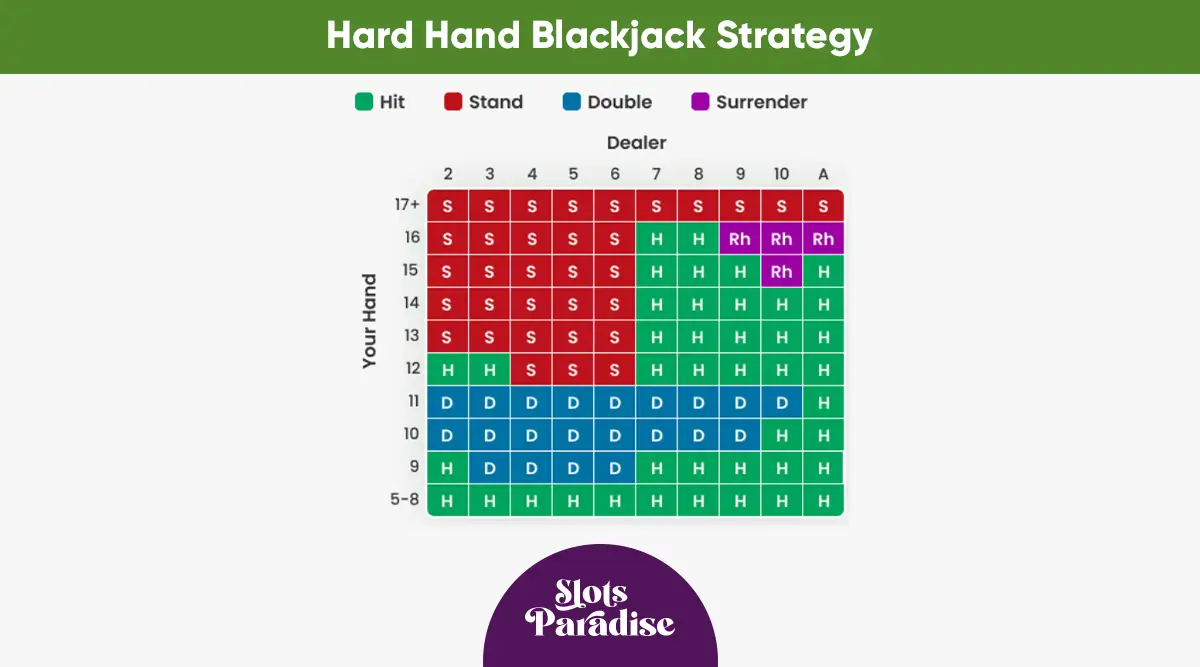
It’s the poster child for a reason. With perfect basic strategy, you can find games with a house edge under 0.5%. But the keyword is “find.” You must seek out tables with 3:2 blackjack payouts (not the brutal 6:5), dealer standing on soft 17, and options for doubling after splitting. Without these rules, the edge balloons.
Baccarat: The Steady Stream
Often shrouded in mystique, baccarat is beautifully simple for the player. Bet on the Banker. That’s it. The Banker bet carries a house edge of about 1.06%, the Player bet about 1.24%. The catch? Most casinos take a 5% commission on winning Banker bets, which is how that slim edge is maintained. It’s a game of patience, not dramatic swings.
Craps: The Community Edge
Craps seems chaotic, but for the disciplined bettor, it offers some of the best odds on the floor. The “Pass Line” with odds, and the “Don’t Pass” with odds, can bring the house edge down to a minuscule 0.37% or lower. The trick? You have to maximize your “free odds” bet, which has no house edge at all. It’s the one bet the casino doesn’t profit from directly.
European Roulette: The Single-Zero Sanctuary
Forget American roulette with its double zero. The single-zero wheel (European or French Roulette) cuts the house edge on even-money bets nearly in half, from 5.26% to 2.7%. And French Roulette, with its “La Partage” or “En Prison” rules, can slash that edge on even-money bets to a stunning 1.35%. It’s a different universe.
| Game | Best Variant/Rule | Approx. House Edge | Key for Serious Players |
| Blackjack | 3:2 payout, S17, DAS | 0.28% – 0.5% | Perfect basic strategy is non-negotiable. |
| Baccarat | Banker Bet | 1.06% | Accept the commission; it’s still the best bet. |
| Craps | Pass/Come with Max Odds | < 0.37% | Bankroll management for odds bets is crucial. |
| Roulette | European (Single Zero) | 2.70% | Always seek the single-zero wheel. |
| Video Poker (Bonus) | 9/6 Jacks or Better | 0.46% (with perfect play) | Paytable knowledge is everything. |
Beyond Knowing the Edge: The Serious Player’s Strategy Toolkit
Knowing which game to sit at is only half the battle. Honestly, it’s the easy half. The real work—the stuff that separates the hopeful from the strategic—happens before you place a single chip.
Rule Hunting and Paytable Scrutiny
You must become a detective. Scan the felt for rule details. Is it a continuous shuffler or a shoe? What’s the roulette wheel type? In video poker (a cousin to table games), the difference between a “9/6” and “8/5” paytable is massive. This minutiae is where your edge is preserved or lost.
Bankroll Management: Your Armor
A low edge doesn’t eliminate variance—the natural ups and downs. A serious player approaches their bankroll like a fund manager. Set a session limit. Use a betting unit that’s a tiny fraction of your total roll. This isn’t about getting rich quick; it’s about staying in the game long enough for the math to smooth out.
The Discipline of Optimal Play
Emotion is the enemy. In blackjack, that means hitting 12 against a dealer 4 even though it feels risky. In craps, it means avoiding the seductive, high-edge proposition bets in the center of the table. The strategy is a cold, hard algorithm. Deviating from it, even out of boredom or gut feeling, is just donating money back.
The Future: Where Are Low-Edge Games Headed?
So, what’s next? The trend is actually a bit paradoxical. Live dealer online games are exploding, offering single-zero roulette and perfect blackjack rules from your living room. Yet, on the physical casino floor, there’s pressure to speed up play and increase hold—hence the spread of 6:5 blackjack.
The serious player’s world is bifurcating. One path leads to the digital realm, with its perfect rules and anonymity. The other requires physical scouting for the last great games in brick-and-mortar casinos, often in high-limit rooms. The core strategy, though, remains rooted in that relentless pursuit of the smallest percentage, the best bet, the most patient approach.
In the end, playing low-house-edge games is a mindset. It’s accepting that the house always has a share, but choosing to pay the smallest possible rent for the thrill of the play. It’s a quiet, calculated form of respect—for the game, for the math, and for your own bankroll.

